Cleared to Enter, Free to Spread: The Dangerous Gaps in America's Immigrant TB Screening System
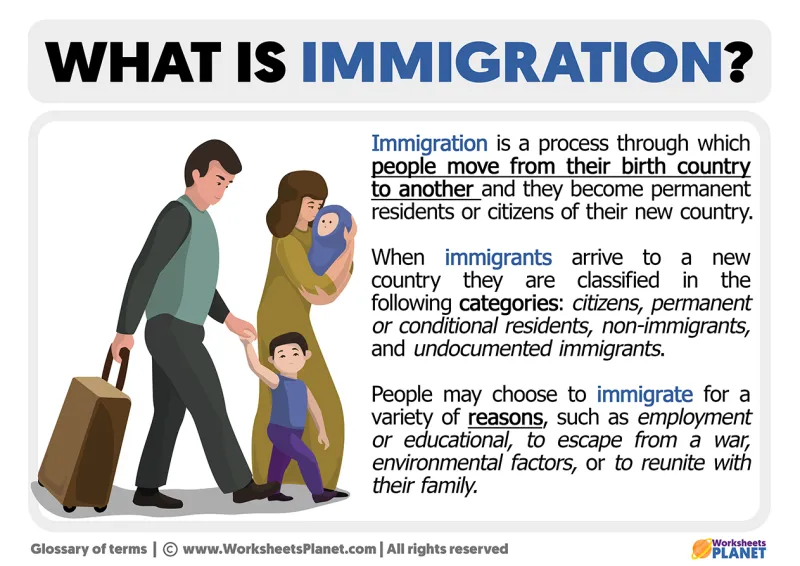
Photo: immigration health screening medical examination airport customs, via www.worksheetsplanet.com
Every year, hundreds of thousands of people immigrate to the United States through legal channels, each of them required by federal regulation to undergo tuberculosis screening before or shortly after arrival. On paper, this system represents one of the most deliberate public health checkpoints in the world. In practice, it is riddled with structural vulnerabilities that allow active tuberculosis cases to pass undetected into American communities — sometimes for months before a diagnosis is ever made.
The consequences are not abstract. They appear in county health department case files, in contact investigation reports, and in the stories of newly arrived families whose TB went undiagnosed long enough to expose coworkers, neighbors, and children in the very communities they had come to join.
A System Built on a Foundation That Has Not Kept Pace
The backbone of pre-immigration TB screening has long been the chest radiograph — a tool that dates, in its diagnostic application, to the mid-twentieth century. Immigrants applying for US visas in most countries are required to undergo a chest X-ray administered by a physician designated by the US Embassy or consulate, known as a panel physician. If the radiograph reveals findings consistent with tuberculosis, additional sputum smear microscopy is required.
The problem is that this protocol was designed to identify a relatively narrow category of active pulmonary TB — the kind that produces visible cavitary lesions and sufficient bacterial burden to register on a smear. It is far less effective at catching early-stage active disease, extrapulmonary TB, or cases in which bacterial loads fall below the threshold of smear detection. Studies have estimated that smear microscopy misses between 20 and 40 percent of culture-confirmed TB cases, depending on disease stage and patient population.
Modern molecular diagnostics, including nucleic acid amplification tests such as GeneXpert, offer substantially higher sensitivity and can detect TB in samples that smear microscopy would miss entirely. Yet these technologies are not uniformly integrated into pre-immigration screening protocols across the dozens of countries from which the United States draws the majority of its immigrant population. The result is a tiered system in which the quality of screening an individual receives depends heavily on where in the world they happen to be applying.
The Window Between Screening and Arrival
Even when pre-immigration screening functions as intended, it captures only a snapshot of a person's health at a single point in time. A visa applicant who tests negative in January may have been recently exposed to TB and not yet progressed to active disease. By the time that person boards a plane, clears customs, and settles into their new city, weeks or months may have elapsed. TB can incubate silently during precisely this interval.
Federal regulations require that immigrants classified as having TB-related conditions receive a referral to their local health department upon arrival. This referral mechanism — known as the Class B notification system — is intended to ensure that individuals with incomplete overseas evaluations or prior TB history receive timely follow-up. In theory, it creates a domestic safety net for cases that overseas screening cannot fully resolve.
In practice, the system depends on a chain of communication between federal immigration health authorities, state health departments, and local public health agencies that is frequently broken. Health departments in high-immigration jurisdictions routinely report receiving Class B notifications weeks after a patient's arrival, by which time the individual may have changed addresses, begun working in close-contact settings, or already developed symptoms that have not yet prompted a medical visit. A 2019 analysis published in the American Journal of Public Health found that follow-up completion rates for Class B TB notifications varied dramatically by state, with some jurisdictions completing evaluation in fewer than half of referred cases.
When the Safety Net Fails: Cases That Fell Through
The human cost of these systemic gaps is difficult to quantify in aggregate, but individual cases illuminate the pattern with troubling clarity.
In one documented instance from a large Midwestern city, a man who had emigrated from a high-burden country was cleared through overseas screening and arrived with a Class B notification attached to his immigration file. The local health department received the notification but was unable to locate him at the address on record. Over the following four months, the man worked at a food processing facility and shared housing with six relatives. When he was eventually diagnosed with active pulmonary TB — discovered only after he sought care at an emergency room for persistent cough and weight loss — contact investigations identified 23 individuals with documented TB exposure, four of whom subsequently tested positive for latent infection.
This case is not an outlier. It is a recognizable pattern that public health professionals working in immigrant-serving communities encounter with dispiriting regularity. The specific details vary; the underlying mechanism does not.
Structural Inequities Compound the Problem
The screening gaps are not distributed evenly across the immigrant population. Refugees, asylum seekers, and undocumented individuals face distinct and often more severe barriers to timely diagnosis. Refugees resettled through official channels are typically required to undergo domestic health assessments within 90 days of arrival, and these assessments include TB testing. However, the capacity of resettlement health programs varies considerably across states, and wait times for initial assessments can stretch well beyond the 90-day target in areas experiencing high resettlement volumes.
For undocumented immigrants, no formal screening mechanism exists at all. This population, which includes many individuals from countries with high TB burden, is effectively invisible to public health surveillance systems until they present with symptomatic disease — often at a late stage, in a setting not equipped to manage TB, and with a contact network that has already been exposed.
Language barriers, fear of immigration enforcement, economic precarity, and lack of health insurance further delay care-seeking among immigrant populations broadly, compounding the diagnostic delays created by structural screening failures.
What a More Effective System Would Require
Public health researchers and immigration medicine specialists have outlined the contours of a more robust approach. At the overseas screening level, expanding access to molecular diagnostics at panel physician sites in high-burden countries would substantially improve case detection sensitivity. The Centers for Disease Control and Prevention has worked to update technical instructions for overseas screening in recent years, but implementation across all designated panel physician networks remains inconsistent.
Domestically, the Class B notification system requires investment in the infrastructure necessary to act on the information it generates. That means adequately staffing local health departments, modernizing the data systems through which notifications are transmitted and tracked, and building stronger linkages between immigration health authorities and community health organizations that have established trust with newly arrived populations.
Perhaps most importantly, TB screening for immigrants cannot be treated as a one-time event. A single chest X-ray taken overseas does not account for the dynamic nature of TB infection, the possibility of post-arrival exposure, or the months during which latent infection may progress to active disease. Expanding routine TB screening opportunities within primary care settings that serve immigrant communities — and reducing the financial and logistical barriers that prevent newly arrived individuals from accessing those settings — would create additional layers of protection that the current system conspicuously lacks.
The Stakes Are Not Hypothetical
Tuberculosis remains the leading infectious disease killer worldwide, and the United States is not insulated from global transmission dynamics by virtue of its screening requirements. Foreign-born individuals account for approximately 70 percent of TB cases diagnosed in the United States each year. That figure is not an indictment of immigrant communities — it is a reflection of the TB burden carried by the countries from which people emigrate, and of the inadequacy of the systems designed to identify and treat disease at the point of entry.
Fixing those systems is not a matter of restricting immigration. It is a matter of investing in the public health infrastructure that allows communities — immigrant and native-born alike — to be protected from a disease that remains entirely preventable and curable when caught in time. The gap between those two realities is where tuberculosis continues to spread, quietly, and largely unseen.