Neighbors as Healers: The Quiet Power of Community Health Workers in America's Fight Against Tuberculosis
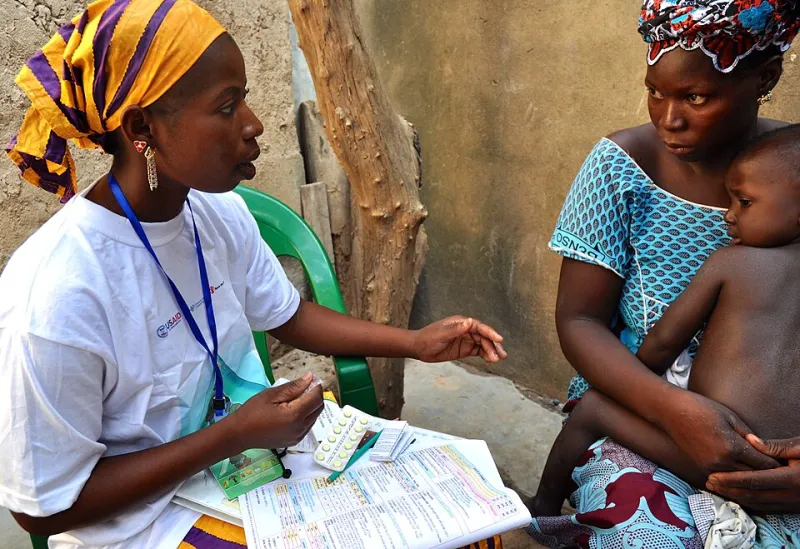
Photo: President's Malaria Initiative, Public domain, via Wikimedia Commons
In a modest apartment complex on the south side of Houston, a woman named Esperanza spends her mornings doing something no physician's office visit ever accomplished. She knocks on doors. She shares coffee. She listens—sometimes for an hour—before she ever mentions the word tuberculosis. By the time she leaves, her neighbors have agreed to be screened.
Esperanza is a community health worker, known in many Latino communities by the Spanish title promotora de salud. She is not a nurse or a physician. She holds no hospital privileges. But in the ongoing effort to stop tuberculosis from spreading through America's most vulnerable populations, workers like her are proving to be among the most consequential figures in the entire public health system.
The Problem That Clinic Walls Cannot Solve
Tuberculosis is not simply a medical problem. It is a social one. Fear of immigration enforcement, distrust of institutional medicine, language barriers, housing instability, and the stigma that still surrounds the disease conspire to keep infected individuals away from the care they need. In many cases, a person living with latent TB infection will never seek testing on their own, and an individual with active disease may delay seeking treatment for months—during which time transmission continues.
Traditional public health outreach, which typically depends on clinic-based referrals, public service announcements, and provider-initiated screening, has proven insufficient in reaching these populations. Appointment no-show rates remain stubbornly high. Treatment completion for latent TB infection, which requires months of medication, frequently falls below acceptable thresholds when patients are left to navigate the process alone.
This is the gap that community health workers are uniquely positioned to close.
Trust as a Clinical Instrument
What distinguishes community health workers from other healthcare extenders is not primarily their training—though many now receive substantial formal preparation—but their social position. They are members of the communities they serve. They shop at the same grocery stores, attend the same churches, and share the same cultural frameworks as the people they are trying to reach.
This proximity is not incidental. It is the mechanism of their effectiveness.
Research published in peer-reviewed public health literature has consistently demonstrated that patients who receive support from community health workers show higher rates of treatment adherence than those who rely on standard clinical follow-up alone. In TB-specific contexts, programs that have embedded community health workers into their case management structures have reported treatment completion rates approaching 90 percent for latent infection—a figure that far exceeds national averages.
In Minneapolis, a program serving Somali and Hmong communities trained community health workers from within those populations to conduct TB education sessions, assist with directly observed therapy, and help families navigate transportation and childcare barriers to clinic attendance. The results were striking: not only did adherence improve, but case-finding rates increased as community members began referring friends and relatives for screening after conversations with workers they trusted.
Similar outcomes have been documented in programs serving migrant agricultural workers in California's Central Valley, resettled refugee communities in the Southeast, and unhoused populations in cities including Chicago, Los Angeles, and New York.
What These Workers Actually Do
The scope of a community health worker's role in TB programming extends well beyond handing out pamphlets. On any given day, a worker embedded in a TB prevention program might accompany a patient to a medical appointment and serve as a cultural interpreter, help a family understand why a child's positive skin test does not mean they are contagious, troubleshoot medication side effects that a patient was too embarrassed to mention to their physician, or spend two hours sitting with a man who has just received an active TB diagnosis and is terrified about what it means for his immigration status.
That last scenario illustrates something critically important: community health workers frequently serve as the emotional anchor of the care relationship. Tuberculosis diagnosis triggers profound anxiety in many patients, particularly those from communities where the disease carries historical associations with poverty, social exclusion, or mortality. Workers who share that cultural background are able to contextualize the diagnosis in ways that reduce panic and increase willingness to engage with treatment.
They also serve a surveillance function that formal health systems struggle to replicate. Because they are embedded in neighborhoods rather than institutions, they often hear about symptomatic individuals before those individuals ever contact a clinic. In this sense, community health workers function as an early warning network—one that operates through relationships rather than reporting systems.
A Strategy Undermined by Its Own Success
Despite compelling evidence of their effectiveness, community health workers remain among the most chronically underfunded and professionally undervalued members of the public health workforce.
Median wages for community health workers in the United States hover near the lower end of the healthcare compensation spectrum, frequently falling between $18 and $22 per hour—a range that fails to reflect the complexity and emotional labor of the role. Many positions are funded through short-term grants rather than stable programmatic budgets, meaning that workers who have spent years building community trust can be laid off when a funding cycle ends. The institutional knowledge they carry—the relationships, the cultural fluency, the hard-won credibility—disappears with them.
Professional recognition has improved modestly in recent years. The Bureau of Labor Statistics formally classifies community health workers as a distinct occupation, and several states have developed certification frameworks. But national standardization remains elusive, and in many public health departments, these workers are still treated as peripheral support staff rather than core clinical team members.
The consequences of this undervaluation are measurable. Programs that lose experienced community health workers to attrition typically see immediate declines in patient engagement metrics. Communities that have developed trust in a particular worker often disengage from the program entirely when that worker departs—a phenomenon that underscores just how person-dependent, and therefore fragile, these relationships can be.
Building a Durable Infrastructure
Addressing the structural vulnerabilities of the community health worker model requires action at multiple levels. Federal TB prevention funding, administered primarily through the Centers for Disease Control and Prevention, should explicitly prioritize community health worker positions as a core programmatic element rather than an optional add-on. State health departments must develop career ladders that allow workers to advance professionally without abandoning the community-facing roles where they are most effective.
Healthcare systems and Federally Qualified Health Centers can play a meaningful role by formally integrating community health workers into care teams, ensuring they have access to patient records, attend case conferences, and receive the supervision and support necessary to sustain demanding work over time.
Perhaps most importantly, the public health community must resist the temptation to view community health workers as a cost-cutting measure—a cheaper substitute for clinical staff. Their value lies not in their lower cost but in their irreplaceable social function. Deploying them effectively requires investment, not simply substitution.
The Measure of What Is Possible
Esperanza and the thousands of workers like her across the United States represent something that no diagnostic algorithm or treatment protocol can replicate: the capacity to make a frightened, isolated person feel seen and safe enough to accept help.
In the effort to end tuberculosis in America, that capacity is not a supplementary service. It is a foundational one. Until the systems that deploy these workers match the seriousness of the disease they are fighting, the full potential of this proven strategy will remain unrealized—and the communities that need it most will continue to bear the cost.