Unseen and Undetected: How Rural America's Healthcare Gaps Are Letting Tuberculosis Spread Unchecked
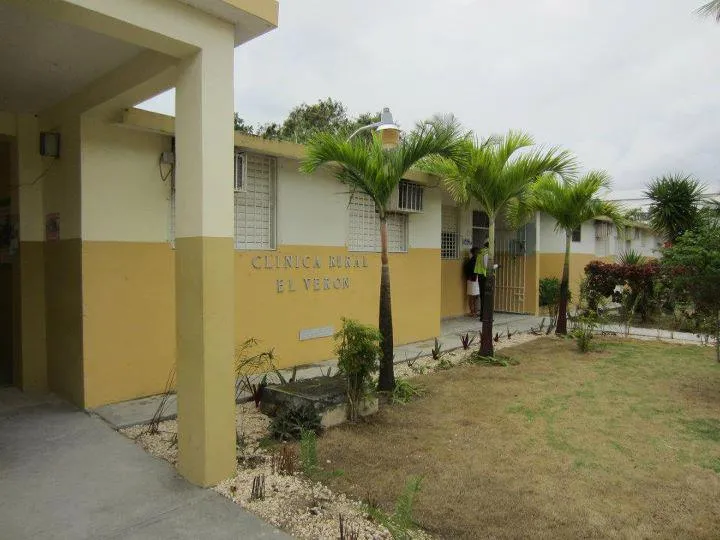
Photo: Luculence, CC BY-SA 3.0, via Wikimedia Commons
In the popular imagination, tuberculosis is a disease of crowded cities—dense apartment blocks, packed subway cars, urban emergency rooms. That perception, while not entirely without basis, obscures a quieter and arguably more dangerous reality: in rural America, TB is slipping through the cracks of a healthcare system that was never adequately designed to find it.
For communities separated from the nearest laboratory by hours of driving, where the sole county clinic may be staffed only two days per week, the gap between exposure and diagnosis can stretch dangerously wide. By the time a confirmed case is identified, the window for early intervention has often already closed—and the opportunity to interrupt transmission has passed with it.
The Scope of the Problem
National tuberculosis surveillance data from the Centers for Disease Control and Prevention consistently documents higher rates of diagnostic delay among patients residing in nonmetropolitan areas. While TB incidence rates are, in absolute terms, often lower in rural counties than in major urban centers, the proportion of cases identified at an advanced stage of pulmonary disease is disproportionately elevated in these regions. Put plainly: fewer people may be getting sick, but those who do are being found later—when treatment is more complex, outcomes are less favorable, and the risk of community spread is greater.
A 2022 analysis published in the American Journal of Respiratory and Critical Care Medicine found that patients in rural settings waited, on average, 30 to 60 days longer from symptom onset to confirmed diagnosis compared to their urban counterparts. That delay is not a minor inconvenience. In the context of an airborne infectious disease, it represents weeks of potential transmission within households, workplaces, and faith communities.
What Providers on the Ground Are Seeing
Healthcare workers operating in resource-limited rural environments describe a system that is structurally ill-equipped to prioritize TB detection. A family medicine physician practicing in a rural Appalachian county described the situation candidly: "We see patients who have been coughing for three months and assumed it was allergies or a lingering cold. They haven't had a chest X-ray because the nearest radiology facility is 45 miles away and they don't have reliable transportation. By the time they come to me, we're already behind."
The diagnostic pathway for tuberculosis requires a sequence of steps—symptom recognition, clinical assessment, tuberculin skin testing or interferon-gamma release assay (IGRA) blood testing, radiographic imaging, and, where indicated, sputum culture. In urban academic medical centers, this sequence can be completed within days. In rural clinics with limited on-site laboratory capacity and no in-house radiology, coordinating these steps across multiple facilities can take weeks—if it happens at all.
Public health nurses working in county health departments across the rural South and Mountain West report similar obstacles. Many counties have lost their dedicated TB program staff to budget cuts over the past decade, leaving general public health workers to manage TB case investigation alongside a full roster of other communicable disease responsibilities.
Infrastructure Deficits and Their Consequences
The laboratory infrastructure gap is perhaps the most consequential structural barrier to timely TB diagnosis in rural America. IGRA testing, now widely preferred over the traditional tuberculin skin test due to its greater specificity and the elimination of a required follow-up visit, requires blood sample processing in a certified laboratory—an asset that many rural counties simply do not possess locally. Samples must be shipped to regional or state public health laboratories, introducing transit time, temperature-sensitivity risks, and logistical complexity that can invalidate results or delay reporting.
Sputum culture, the gold standard for confirming active pulmonary TB and assessing drug susceptibility, requires biosafety-level-3 laboratory conditions. The number of facilities capable of performing this testing in the United States is limited, and geographic access to those facilities is deeply unequal. For patients in remote areas, specimen collection, preservation, and transport present formidable practical challenges.
The consequences of these deficits are measurable. Delayed diagnosis means delayed treatment initiation, which in turn means prolonged infectiousness. Contact investigations—the systematic identification and testing of individuals who have been exposed to a confirmed case—are also more difficult to execute in communities where provider capacity is thin and health department resources are stretched.
Mobile Testing: A Promising but Incomplete Solution
Several state health departments and nonprofit organizations have piloted mobile TB testing units as a means of extending diagnostic reach into underserved communities. These units, which can administer IGRA blood draws, perform chest radiography, and provide point-of-care clinical assessment, have demonstrated meaningful success in reaching populations that would not otherwise seek care at a fixed facility.
In Texas, a mobile health initiative targeting migrant agricultural worker communities along the Rio Grande Valley identified a cluster of active TB cases in a community that had had no prior contact with the formal healthcare system. Similar programs in Montana and rural Georgia have reached patients in counties where the county health department had not documented a TB case in years—not because the disease was absent, but because the systems for finding it were inadequate.
Mobile testing, however, is not a substitute for sustained investment in rural healthcare infrastructure. These programs require ongoing funding, trained personnel, and integration with laboratory and treatment systems—conditions that are difficult to maintain without stable federal and state support.
Policy Pathways Forward
Public health advocates and infectious disease specialists have outlined a range of policy interventions that could meaningfully reduce the rural TB detection gap. These include:
- Expanded federal funding for state and local TB programs under Section 317 of the Public Health Service Act, with allocation formulas that account for geographic access barriers rather than relying solely on case counts.
- Telehealth integration to enable remote clinical consultation for TB diagnosis and treatment management, reducing the burden on under-resourced rural providers.
- Point-of-care diagnostic development that would allow IGRA-equivalent testing without the need for laboratory processing, a technology currently in advanced stages of research.
- Workforce pipeline investment in rural public health nursing and epidemiology, including loan forgiveness programs and rural placement incentives for TB program staff.
- Regional laboratory compacts that formalize specimen transport agreements between rural health departments and state laboratory systems, ensuring reliable processing timelines.
The Cost of Inaction
Tuberculosis is a curable disease. With appropriate diagnosis and treatment, the vast majority of patients recover fully, and transmission can be interrupted. The persistence of a rural detection gap is not, therefore, a reflection of medical limitation—it is a reflection of policy choices and resource allocation decisions that have left entire communities underserved.
The StopTB Initiative remains committed to advancing equitable access to tuberculosis prevention and care across all communities in the United States. Closing the rural testing gap is not a peripheral concern; it is central to the goal of ending TB in America. Every undetected case is a missed opportunity—for the individual patient, for their household, and for the broader community whose health depends on early, effective disease control.
The path forward requires sustained attention, coordinated advocacy, and the political will to invest in communities that have historically been rendered invisible by the very systems meant to protect them.