Around the Clock Against an Ancient Disease: How 24/7 TB Diagnostic Hubs Are Closing the Gap Between Exposure and Treatment
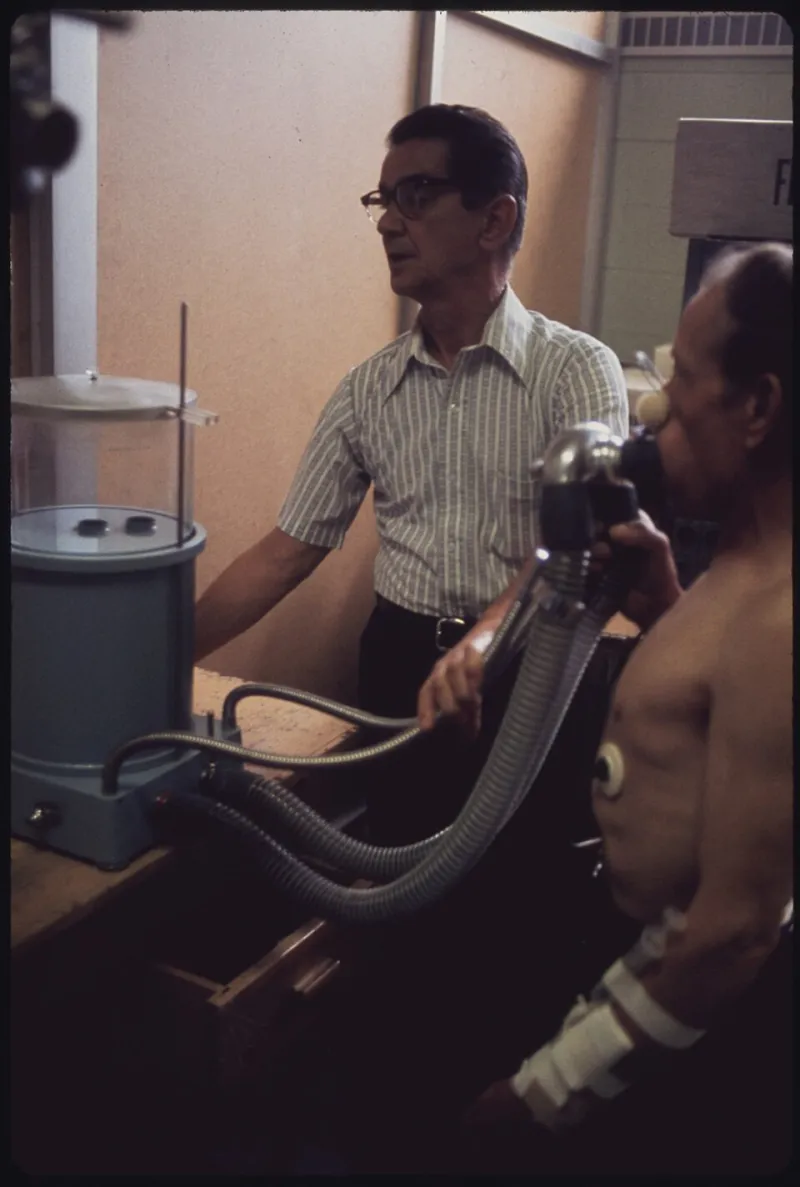
Photo: Jack Corn, Public domain, via Wikimedia Commons
For most of the history of tuberculosis control in the United States, the disease has operated on its own schedule — indifferent to office hours, insurance coverage windows, or the shift rotations of the people most likely to carry it. The bacterium Mycobacterium tuberculosis does not pause transmission because a public health laboratory closes at five o'clock on a Friday afternoon. Yet for decades, American diagnostic infrastructure has done exactly that.
A small but growing number of cities are now pushing back against that structural mismatch. By establishing tuberculosis diagnostic centers that operate continuously — processing sputum samples, running nucleic acid amplification tests, and initiating contact tracing protocols at two in the morning as readily as at two in the afternoon — these facilities are compressing one of the most dangerous intervals in infectious disease medicine: the time between a patient's first clinical encounter and the moment treatment begins.
The results, while still emerging, are drawing serious attention from public health administrators, epidemiologists, and community health advocates who have long argued that operational hours are not a neutral administrative detail. They are, in fact, a determinant of who gets diagnosed — and who does not.
The Diagnostic Delay Problem in American TB Control
Delays in tuberculosis diagnosis are not a new concern. Nationally, studies have consistently documented that symptomatic patients wait an average of several weeks — and sometimes months — between first presenting to a healthcare provider and receiving a confirmed TB diagnosis. Each day within that interval represents continued potential transmission, accelerating disease progression in the index patient and expanding the circle of exposed contacts.
The reasons for these delays are multiple and well-documented: provider unfamiliarity with TB symptomology, laboratory processing backlogs, fragmented referral systems, and the simple reality that many of the populations most vulnerable to tuberculosis — agricultural workers, construction laborers, overnight shift employees in food processing and hospitality industries — are least able to access care during conventional business hours.
This last factor is more significant than it may initially appear. According to federal labor statistics, approximately 15 million Americans work non-traditional shifts, with disproportionate representation among immigrant communities and low-income workers — precisely the demographic groups that carry the highest burden of tuberculosis in the United States. A diagnostic system built around a nine-to-five framework is, in practice, a system that erects access barriers for the people who most urgently need it.
What a 24/7 Facility Actually Looks Like
The operational architecture of a continuously functioning TB diagnostic hub differs substantially from a standard public health clinic with extended hours. The distinction matters.
Extended-hours clinics typically allow patients to present later in the evening for specimen collection, but samples are batched and processed during standard laboratory shifts. A true 24/7 facility maintains active laboratory staffing throughout the night, enabling real-time processing of sputum smears and GeneXpert molecular tests — the rapid nucleic acid amplification platform now considered a frontline diagnostic tool by the World Health Organization and recommended by the Centers for Disease Control and Prevention for initial TB evaluation.
In cities where these hubs have been piloted — including programs operating within larger urban health department networks in the Northeast and along the Pacific Coast — the operational model also integrates after-hours contact tracing capacity. When a positive result is returned at midnight, a case manager can initiate outreach to identified contacts before the following morning rather than queuing that work for the next business day.
Funding for these facilities has come from a patchwork of sources: CDC's Division of Tuberculosis Elimination grant programs, municipal public health department allocations, and in some instances, partnerships with academic medical centers seeking to embed research infrastructure within the operational framework. The financial sustainability question remains one of the most significant challenges facing program administrators, who must justify continuous staffing costs against outcome metrics that, while compelling, are still accumulating.
Early Outcomes Data: What the Numbers Are Showing
The evidence base supporting 24/7 TB diagnostic access, while not yet large enough to constitute definitive clinical consensus, is directionally consistent. Programs tracking time-to-treatment initiation — the interval between specimen collection and the first dose of anti-tuberculosis medication — have reported reductions of between 30 and 50 percent compared to historical baselines at the same facilities prior to continuous operation.
Perhaps more consequentially, these programs are documenting improvements in the rate at which contacts of confirmed cases actually complete their own evaluations. When contact tracing is initiated within hours rather than days of a positive result, the proportion of exposed individuals who present for testing increases meaningfully. This matters not only for individual patient outcomes but for transmission chain interruption — the fundamental goal of any TB control strategy.
For vulnerable populations specifically, the access equity dimension of continuous diagnostic availability is difficult to overstate. Preliminary data from one urban program indicated that a substantial proportion of patients who received diagnoses during overnight or early-morning hours had presented to emergency departments or urgent care facilities on prior occasions without receiving appropriate TB workups — encounters that, under a standard diagnostic framework, had simply not resulted in timely follow-through.
The Operational Challenges That Cannot Be Overlooked
Administrators running these facilities are candid about the difficulties involved. Staffing a specialized tuberculosis laboratory continuously requires a depth of trained personnel that many health departments struggle to maintain. Infection control protocols for overnight specimen handling demand rigorous oversight. Supply chain reliability for testing reagents becomes more consequential when there is no buffer of daytime hours to manage shortfalls.
There is also the question of patient awareness. A facility that operates at three in the morning is only useful if the patients who need it know it exists and feel safe presenting. Community outreach, multilingual communication, and partnerships with trusted organizations serving immigrant and low-wage worker communities are not ancillary to the 24/7 model — they are prerequisites for it.
Some public health officials have raised questions about whether the investment required to sustain round-the-clock diagnostic capacity is better directed toward expanding the geographic footprint of standard-hours facilities in underserved areas. It is a legitimate debate, and one that the field has not fully resolved.
A Model Worth Scaling — Carefully
The 24/7 TB diagnostic hub is not a universal solution, and its proponents are not claiming otherwise. In rural and semi-rural regions where tuberculosis incidence is lower and the logistical barriers to continuous staffing are higher, alternative models — including telehealth-supported triage and regional specimen transport networks — may offer more practical pathways to reducing diagnostic delay.
But in high-density urban environments with substantial populations working outside conventional hours, the case for continuous diagnostic access is strong. Tuberculosis is, at its core, a disease of proximity and time. The longer a person remains undiagnosed, the more people they may expose. The more barriers that exist between symptom onset and confirmed diagnosis, the more transmission chains go uninterrupted.
Closing those gaps requires more than new drugs or updated clinical guidelines. It requires an honest accounting of when and how the people most at risk can actually access care — and a willingness to redesign systems accordingly. The TB lab that never closes is, in that sense, less a technological innovation than an operational commitment: a declaration that the disease does not respect business hours, and neither will the response to it.