Months Between Exposure and Answer: The Geographic Crisis in American TB Diagnostics
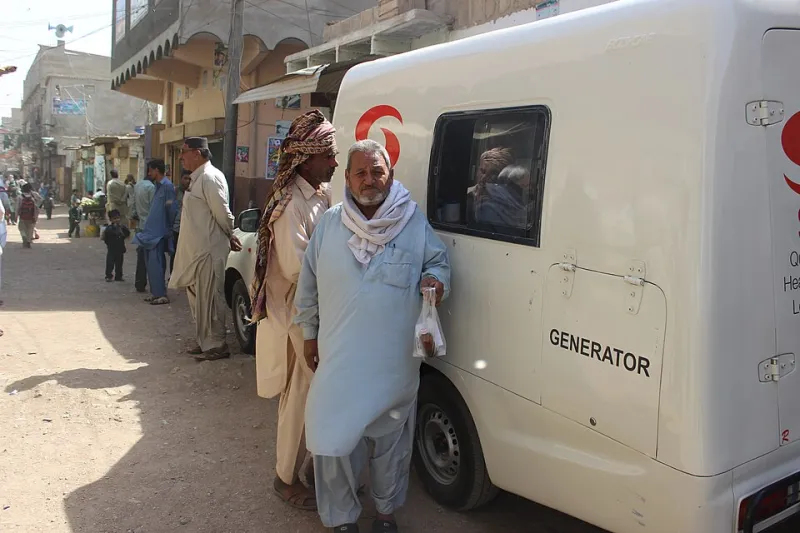
Photo: Captain McNugget, CC BY-SA 4.0, via Wikimedia Commons
Somewhere in the rural Mississippi Delta, a farmworker spent six weeks in diagnostic limbo. His cough had persisted through two courses of antibiotics prescribed by a local clinic. A nurse practitioner, working without access to an on-site pulmonologist, ordered a sputum culture—the gold-standard confirmatory test for active tuberculosis. The sample traveled by courier to a state reference laboratory more than two hundred miles away. The result arrived forty-three days later. By that point, three members of his household had developed symptoms.
His story is not an anomaly. It is a pattern.
Across the United States, a profound and largely invisible disparity has taken root in the infrastructure that detects tuberculosis. While major metropolitan health systems in cities like New York, Houston, and Los Angeles maintain robust diagnostic pipelines capable of returning confirmatory culture results within two to three weeks, patients in dozens of states are caught in what public health researchers have begun calling TB testing deserts—geographic zones where laboratory capacity is so sparse, and courier logistics so cumbersome, that a straightforward diagnostic workup can consume the better part of two months.
The Architecture of Delay
Understanding why diagnostic timelines stretch so dramatically in certain regions requires examining how TB testing actually works in the United States. A confirmed tuberculosis diagnosis typically demands a multi-step process: an initial symptom evaluation, a tuberculin skin test or interferon-gamma release assay (IGRA), chest imaging, and—critically—sputum culture with drug-susceptibility testing. That final step, the culture, cannot be performed in a standard community laboratory. It requires a biosafety level-3 facility and specialized media that few hospitals outside major academic medical centers maintain.
The result is a hub-and-spoke system in which samples from across enormous geographic catchment areas funnel into a handful of state or regional reference laboratories. In states like Montana, Wyoming, and the Dakotas, a single state public health laboratory may serve a landmass larger than several European nations. Courier schedules, specimen viability requirements, and processing backlogs compound the distance problem into a time problem.
A 2023 analysis by researchers at the Johns Hopkins Center for Tuberculosis Research found that median sputum culture turnaround times varied from eleven days in high-volume urban jurisdictions to fifty-two days in the lowest-capacity rural settings—a nearly five-fold disparity that has direct consequences for both patient outcomes and community transmission chains.
What Delays Actually Cost
The clinical consequences of prolonged diagnostic uncertainty are measurable and serious. Patients awaiting results frequently discontinue the isolation precautions they were asked to observe, reasoning—understandably—that a diagnosis has not been confirmed. Clinicians, reluctant to initiate a months-long drug regimen without confirmation, defer treatment. Household and workplace contacts go untested.
Epidemiologists refer to this window as the diagnostic shadow: the period during which an infectious individual remains undetected within a community. In tuberculosis, where a single untreated patient can infect ten to fifteen contacts annually, each additional week of diagnostic delay carries a calculable transmission cost.
Beyond transmission, delays erode patient trust. In communities where healthcare encounters are already fraught—among migrant agricultural workers, unhoused populations, and residents of rural communities with historical reasons to distrust public health institutions—a six-week wait for an answer is not a bureaucratic inconvenience. It is a reason to disengage from care entirely.
Mapping the Deserts
Geographic analysis of TB diagnostic capacity reveals a pattern that mirrors broader healthcare infrastructure disparities in America. The states with the longest average turnaround times are disproportionately rural, disproportionately Southern or Plains-region, and disproportionately dependent on a single centralized public health laboratory.
Appalachia presents a particularly acute example. Across eastern Kentucky, southwestern Virginia, and rural West Virginia, county health departments that once maintained modest TB clinic operations were systematically defunded during the budget contractions of the 2010s. The local nurses who knew how to collect and process sputum specimens, counsel patients on isolation, and coordinate with state labs retired or moved on. Their institutional knowledge was not replaced.
In the Southwest, the challenge takes a different shape. States like New Mexico and Arizona maintain substantial TB caseloads driven by proximity to the US-Mexico border and large populations of farmworkers and recent immigrants. Yet laboratory infrastructure has not scaled proportionally with caseload. Confirmatory testing for drug-resistant strains—which requires additional molecular sequencing steps—can extend timelines further still.
The Promise of Decentralized Rapid Testing
The most compelling argument against accepting these delays as inevitable comes from countries that have confronted similar infrastructure constraints and responded with structural innovation. South Africa, facing a TB burden orders of magnitude larger than the United States, deployed a network of GeneXpert molecular diagnostic platforms at district-level clinics beginning in the early 2010s. The result was a compression of average diagnostic timelines from weeks to under forty-eight hours for initial detection.
GeneXpert and its successors—including newer platforms capable of simultaneously detecting TB and drug-resistance markers—do not require biosafety level-3 infrastructure. They are cartridge-based, operable by trained community health workers, and produce results in under two hours. The technology exists. The question is whether American public health policy will invest in deploying it at the community level.
Several domestic pilot programs offer preliminary evidence that decentralization is feasible. A network of rapid-testing sites established across rural California's Central Valley between 2019 and 2022 reduced average time-to-diagnosis by sixty-three percent among farmworker populations. A similar initiative in a cluster of Appalachian counties demonstrated that community health center staff could be trained to operate point-of-care molecular platforms with high fidelity in under three days.
The Policy Gap
Despite these proof-of-concept successes, rapid diagnostic decentralization has not been adopted as a federal priority. Funding for TB laboratory infrastructure flows primarily through the Centers for Disease Control and Prevention's Division of Tuberculosis Elimination, which allocates resources to state health departments through cooperative agreements. Those agreements have historically prioritized maintaining existing centralized laboratory functions over piloting distributed models.
Advocacy organizations, including those within the StopTB Initiative network, have called for a dedicated federal investment stream specifically targeting diagnostic capacity in high-gap jurisdictions. The ask is not modest—equipping even fifty high-need community health centers with point-of-care molecular platforms, alongside training and supply chain support, would require sustained multi-year funding. But the alternative is a status quo in which geography continues to determine whether an American patient receives a TB diagnosis in two days or two months.
Closing the Distance
The farmworker in the Mississippi Delta eventually received his diagnosis, began treatment, and recovered. His three household contacts were also identified and treated. But the six weeks his community spent in the diagnostic shadow represent a failure that should not be normalized.
Tuberculosis is a curable disease. Effective diagnostics exist. The tools to compress turnaround times from weeks to hours are commercially available and field-tested. What separates the communities that benefit from those tools and the communities that do not is not medical science—it is political will and resource allocation.
America cannot credibly claim to be advancing toward the elimination of tuberculosis while permitting a system in which a patient's zip code determines whether their diagnosis arrives before or after their disease progresses. Closing the testing deserts is not a peripheral concern in the national TB strategy. It is the precondition for every other intervention that follows.