No Address, No Record, No Treatment: How America's Shelter System Is Losing the Fight Against Tuberculosis
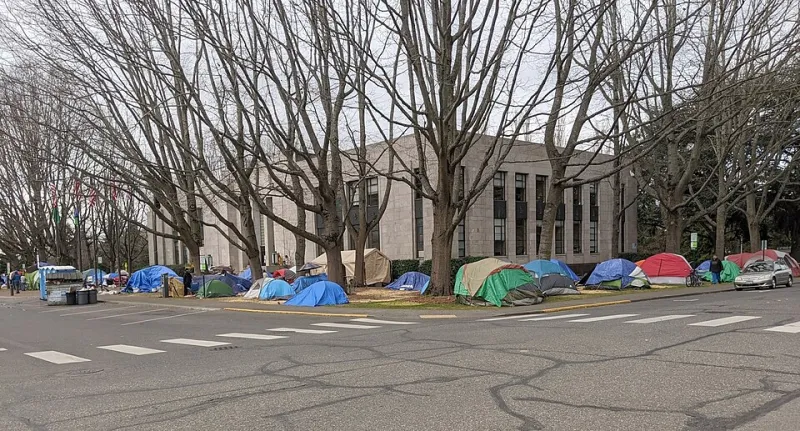
Photo: Robert Ashworth from Bellingham, WA., USA, CC BY 2.0, via Wikimedia Commons
On a winter night in a mid-sized American city, a man coughing persistently in a crowded shelter dormitory may represent the beginning of an outbreak — or the continuation of one that began weeks ago in another facility across town. Nobody may ever know which. Without a shared medical record, without a permanent address to anchor follow-up care, and without a shelter intake protocol that includes tuberculosis screening, he will check in, sleep in a room with dozens of others, and move on by morning.
This is not an exceptional scenario. It is routine.
Across the country, public health researchers, shelter directors, and TB program coordinators are raising alarms about a convergence of structural failures that have made homeless shelters among the highest-risk environments for tuberculosis transmission in the United States — and among the least equipped to respond.
A Perfect Environment for an Ancient Pathogen
Mycobacterium tuberculosis, the bacterium responsible for TB, spreads through the air when an infected person coughs, speaks, or breathes. It thrives in exactly the conditions that define emergency shelter life: poor ventilation, high occupancy, prolonged close contact, and populations whose immune systems are often compromised by malnutrition, untreated HIV, substance use disorders, and chronic stress.
Studies published in peer-reviewed public health journals consistently show that people experiencing homelessness are significantly more likely to carry latent TB infection and to progress from latent to active disease than the general population. In some urban shelter networks, TB incidence rates have been documented at levels comparable to high-burden countries — a stark contrast to the low national average that policymakers often cite when characterizing America's TB burden.
What makes the shelter environment particularly dangerous is not simply the density of vulnerable individuals. It is the mobility. Shelter guests frequently move between facilities, sleep in vehicles or encampments on nights when beds are unavailable, and access emergency medical care episodically rather than continuously. A person who tests positive for TB at a county clinic on a Tuesday may not be reachable by Wednesday morning. By the following week, they may have crossed into another jurisdiction entirely.
The Screening Gap Nobody Wants to Own
Federal guidelines recommend that homeless individuals be prioritized for TB testing, and the Centers for Disease Control and Prevention has long identified people experiencing homelessness as a high-risk group. Yet the translation of that recommendation into consistent shelter-level practice remains deeply uneven.
A significant portion of emergency shelters across the United States operate without any standardized TB screening protocol at intake. Many rely on self-reporting — asking guests whether they have been diagnosed with or treated for tuberculosis — a method that public health professionals widely regard as insufficient. Others conduct symptom screening, which is more useful but still misses the large proportion of active TB cases that present without classic symptoms in immunocompromised individuals.
The reasons for this gap are not simply indifference. Shelter operators frequently cite funding constraints, staff turnover, the logistical difficulty of connecting transient guests to follow-up care, and the absence of clear jurisdictional responsibility. TB control, in most states, is managed by local health departments. Shelter funding flows through housing authorities, social service agencies, and nonprofit networks. These systems rarely communicate with one another in real time, and the absence of integrated data infrastructure means that a TB exposure event in one shelter may not reach the attention of the health department until an outbreak is already under way.
Outbreaks That Didn't Have to Happen
The consequences of this fragmentation are not hypothetical. TB outbreaks linked to homeless shelter networks have been documented in cities including San Francisco, Los Angeles, Atlanta, and Seattle, among others. In several cases, contact investigations revealed that transmission had been occurring for months before any case was identified — in part because the index patient had moved through multiple facilities before receiving a diagnosis.
In one widely cited outbreak in a West Coast city, public health investigators traced a cluster of active TB cases back to a single individual who had been symptomatic for an estimated four to six months before diagnosis. During that period, the individual had stayed in at least three different shelters and accessed emergency care twice without receiving a TB test. The outbreak ultimately required contact tracing across hundreds of individuals and cost the local health department significantly more than a prevention-oriented screening program would have.
These events illuminate a recurring pattern: the absence of proactive screening forces public health agencies into expensive, reactive outbreak response — consuming resources that could have been deployed far more efficiently upstream.
Practical Solutions That Don't Require Permanent Addresses
Public health advocates working at the intersection of housing instability and infectious disease have spent years developing and piloting approaches that account for the realities of shelter life. Several of these models have demonstrated measurable results.
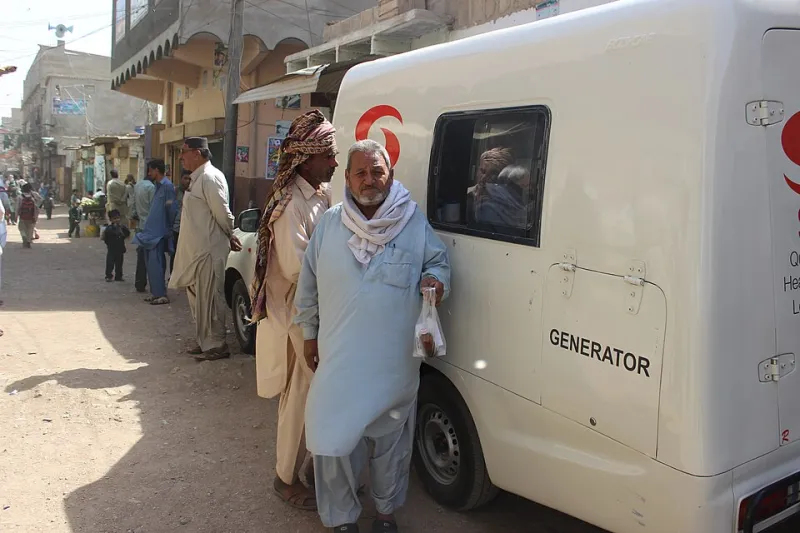
Mobile TB testing units, operated by local health departments or community health organizations, can conduct tuberculin skin tests and interferon-gamma release assays at shelter locations during intake hours, eliminating the requirement that guests travel to a clinic. In cities where these programs have been implemented consistently, testing rates among shelter populations have increased substantially.
Electronic case management systems designed to flag individuals across multiple shelter databases — without requiring a permanent address — have been piloted in jurisdictions including New York City and Houston. These systems allow public health workers to track whether an individual with a pending TB test result has moved to a new facility, enabling follow-up that would otherwise be impossible.
Directly observed therapy, the standard of care for active TB treatment, presents particular challenges in the shelter context. However, several programs have adapted DOT protocols to allow community health workers to administer medication at shelter locations, encampment sites, and other locations frequented by individuals in treatment — removing the expectation that patients will travel to a clinic on a fixed schedule.
Perhaps most critically, shelter staff training has emerged as a low-cost, high-impact intervention. When front-line workers understand the symptoms of active TB, know how to initiate a referral, and are equipped with simple respiratory hygiene protocols, the time between symptom onset and diagnosis shortens considerably.
A Shared Responsibility That No One Has Claimed
The underlying challenge is structural. No single agency currently owns the problem of TB in homeless shelter networks. Health departments have the expertise but often lack the physical presence inside shelter facilities. Shelter operators have the access but often lack the training, resources, and authority to implement clinical protocols. Funders frequently support either housing services or health services, rarely both in an integrated framework.
Addressing this will require deliberate policy action at the federal, state, and local levels — including dedicated funding streams that recognize TB screening as a component of shelter operations, not an add-on program to be pursued when resources permit. It will also require data-sharing agreements that allow health departments and shelter networks to communicate in real time about individuals who may be at risk.
The technology, the clinical knowledge, and the community infrastructure to do this work already exist. What has been missing is the coordinated will to deploy them systematically.
For the man coughing in the shelter dormitory, the window for early intervention is narrow. Every night that passes without a test, every morning that he moves to a new facility without a referral, every week that a strained public health system fails to connect the dots represents an opportunity lost — not just for him, but for everyone who shared that room.
Tuberculosis does not respect the boundaries between systems. The response to it cannot afford to, either.