Waiting for an Answer That Takes Too Long: The Diagnostic Infrastructure Crisis Quietly Costing TB Patients Their Health
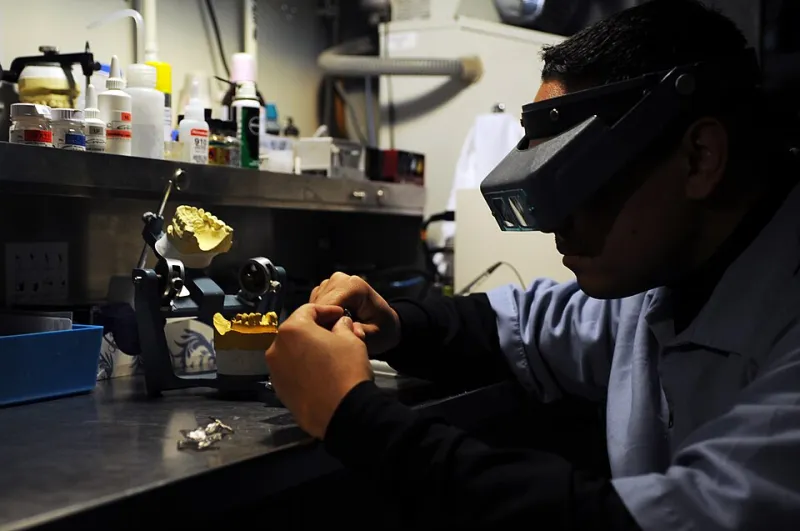
Photo: U.S. Navy photo by Seaman Dagan Alexander, Public domain, via Wikimedia Commons
In a well-resourced academic medical center, a clinician who suspects tuberculosis can order a nucleic acid amplification test and receive a confirmed result within hours. In a rural critical access hospital serving a county with limited tax revenue, no specialist workforce, and aging laboratory infrastructure, that same patient may wait three days — or longer — for a result that has to travel to a reference laboratory hundreds of miles away. That distance, measured not in geography alone but in time, translates directly into continued exposure, delayed treatment, and preventable transmission.
The United States has not eliminated tuberculosis. The country recorded more than 9,600 new TB cases in 2023, the highest annual count in over a decade. Yet the conversation about America's TB resurgence rarely centers on one of its most consequential structural failures: the profound unevenness of diagnostic capacity across the nation's hospital systems.
A Technology Gap With Real Consequences
The gold standard for rapid TB diagnosis is nucleic acid amplification testing — specifically, platforms such as the Xpert MTB/RIF assay, which can detect Mycobacterium tuberculosis and simultaneously identify rifampin resistance in under two hours. The technology exists. It is not experimental. The World Health Organization endorsed it more than a decade ago, and the Centers for Disease Control and Prevention has recommended its use in American clinical settings.
And yet, according to data compiled from state laboratory surveys and hospital accreditation disclosures, a significant proportion of acute care hospitals in low-income rural counties and underserved urban areas still rely on conventional smear microscopy or culture-based methods as their primary diagnostic pathway. Smear microscopy carries a sensitivity rate as low as 50 percent in paucibacillary cases. Culture confirmation, while highly accurate, can require two to six weeks. Neither approach is compatible with the rapid isolation, contact tracing, and treatment initiation that modern TB control demands.
The consequences are not abstract. Research published in peer-reviewed infectious disease journals has consistently demonstrated that each day of diagnostic delay correlates with additional household and healthcare worker exposures. In congregate settings — emergency departments, dialysis units, nursing facilities — a patient with unconfirmed pulmonary tuberculosis who remains unmasked and unisolated for 48 to 72 hours can expose dozens of individuals before a result is returned.
Which Regions Are Most Affected
The diagnostic desert is not evenly distributed. An analysis of hospital laboratory certification data and TB case reporting rates reveals several patterns of concern.
In the rural South and Appalachian corridor, critical access hospitals frequently lack the capital equipment budgets to acquire and maintain molecular diagnostic platforms. The Xpert GeneXpert system, for instance, requires an upfront equipment investment of roughly $17,000 to $30,000, plus ongoing costs for cartridges, maintenance contracts, and trained laboratory personnel. For a hospital operating on thin margins with a small laboratory staff, that commitment is difficult to justify against competing infrastructure priorities — even when TB case rates in the surrounding community are rising.
In parts of the rural Southwest and along the US-Mexico border, where TB incidence rates run well above the national average, some county hospitals send specimens to state public health laboratories that are chronically under-resourced themselves. When volume surges — as it has in recent years — turnaround times extend further. Clinicians in these communities describe a diagnostic limbo in which patients are empirically isolated, consuming scarce inpatient beds, while awaiting confirmation that could guide more targeted management decisions.
Large urban safety-net hospitals face a different version of the same problem. High patient volume, strained laboratory staffing, and competing diagnostic demands can create de facto delays even in facilities that nominally possess molecular testing capability. Possessing the equipment and reliably deploying it across all appropriate clinical scenarios are not equivalent achievements.
The Human Cost Behind the Data
Consider the experience of a community hospital in a mid-sized Southeastern city — one that serves a disproportionately uninsured population and operates without on-site infectious disease specialists. When a patient presents with a productive cough, night sweats, and a six-week history of weight loss, the emergency physician orders a chest radiograph and sputum smear. The radiograph shows an upper-lobe infiltrate. The smear returns negative — a result that, given the test's limited sensitivity, does not exclude TB but is frequently misread as reassurance.
Without rapid molecular confirmation available in-house, the patient is discharged with a diagnosis of community-acquired pneumonia and standard antibiotics. Three weeks later, after failing to improve, the patient returns. By that point, two household members have developed symptoms. A state laboratory eventually confirms drug-susceptible TB in all three individuals. The original patient has now lost more than a month of effective treatment time, and a preventable cluster has formed.
This scenario is not hypothetical in its essential structure. Public health investigators and TB program coordinators across multiple states have described nearly identical chains of events in interviews and case review sessions. The details vary. The outcome does not.
What Modernization Actually Requires
The path to closing the diagnostic gap is neither simple nor inexpensive, but it is achievable with coordinated investment and policy alignment.
Federal and state funding mechanisms must be expanded and targeted. The CDC's Division of Tuberculosis Elimination administers cooperative agreements with state and local health departments, but funding levels have remained relatively flat for years even as case counts climb. Dedicated capital equipment grants — modeled on the federally qualified health center infrastructure programs — could allow under-resourced hospitals to acquire molecular platforms without requiring them to absorb the full cost.
Regional hub-and-spoke laboratory networks offer a near-term solution. Rather than expecting every rural hospital to maintain its own molecular testing capability, health systems can establish regional reference hubs equipped with high-throughput platforms and courier networks capable of returning results within 24 hours. Several states have piloted this approach for other infectious diseases, and the model is transferable.
Point-of-care molecular testing is an emerging option that deserves accelerated adoption. Portable, cartridge-based platforms are already in use in international TB programs operating in low-resource environments. Regulatory pathways for US clinical deployment exist, and the case for prioritizing these devices in frontier and critical access settings is compelling.
Electronic health record integration and clinical decision support tools can reduce the frequency with which TB is removed from the differential prematurely. When a patient's risk factors, radiographic findings, and symptom profile are flagged automatically, clinicians are less likely to stop at a negative smear result without pursuing molecular confirmation.
The Cost of Inaction
Public health infrastructure spending is rarely politically visible. Diagnostic laboratory equipment does not generate the kind of attention that a new emergency wing or a robotic surgical suite might attract. But the downstream costs of diagnostic delay — extended hospitalizations, contact investigation workups, outbreak response, long-term treatment for patients whose disease has progressed — consistently exceed the upfront investment in modernized testing capacity.
More importantly, every day a person with active tuberculosis goes undiagnosed is a day that disease spreads. In a country that has committed, at least rhetorically, to ending TB, allowing preventable diagnostic delays to persist in any region is not a resource problem alone. It is a policy choice. And it is one that the communities bearing the highest burden of this disease can no longer afford to accept.